How Do You Heal in the Same House Where Everything Happened?
How do you heal when you’re still living in the same physical space where your life fell apart?
Some mornings you wake up convinced you should sell everything and start fresh somewhere new — a place untouched by memories, expectations, or the weight of your old life.
And then there are days where the thought of leaving the familiar knocks the air out of your lungs, because that kind of isolation is the very thing that kept you in the marriage longer than you should’ve stayed.
Meanwhile, your children have roots here — their school, their friends, their little routines.
Part of you wants to shield them from the world, and another part wants the world to treat them with understanding and empathy.
It’s confusing.
It’s emotional.
It’s heavy.
Healing inside the home where everything happened is complicated in a way only those who’ve lived it truly understand.
This isn’t about shaming the other person.
This is about owning a story you never asked to live — a chapter you didn’t choose, a narrative you wish you could close but somehow still have to carry.
So how do you stay in the physical space and still allow healing to take place?
Here is how I did it — phase by phase, piece by piece, with grace, grit, and a whole lot of honesty.
Phase One: The Cleanout
For me, it started with space.
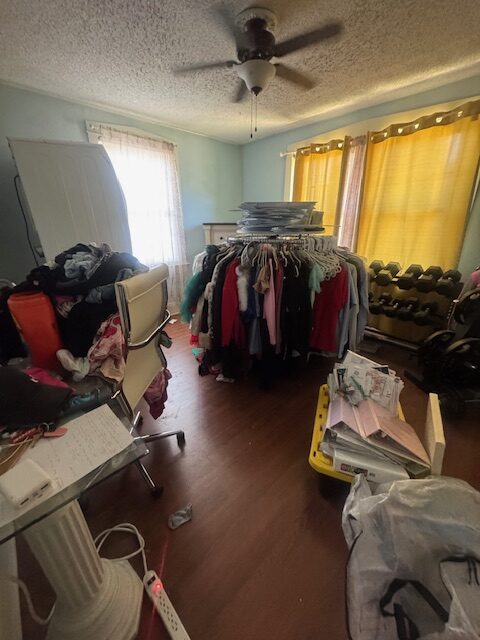
Every picture, every sentimental item, every reminder of a life that no longer fit who I was becoming went into boxes and straight into the shed.
Not to pretend my life didn’t happen — but to give myself room to breathe.
Healing needs space.
Space needs boundaries.
And boundaries need honesty.
Removing those objects wasn’t erasing my past — it was releasing its grip on my present.
Phase Two: Redefining What Works for Us Now
Next came deciding what actually serves our new life.
I moved my bedroom three times in eight months trying to find where I felt grounded again.
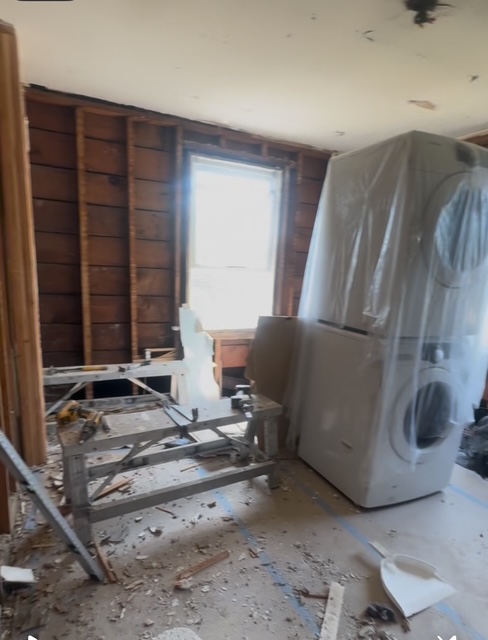
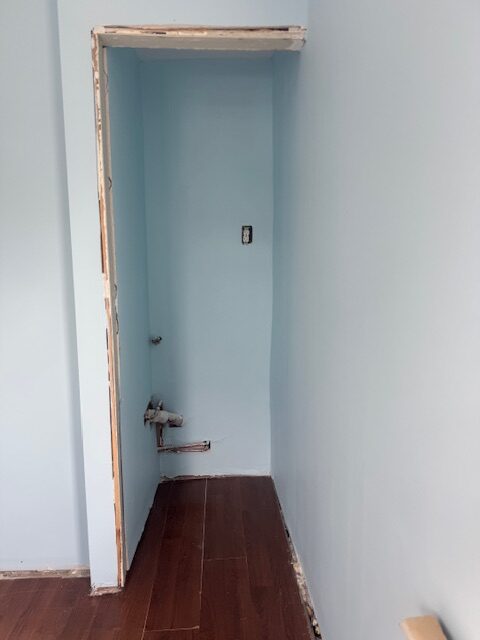
I removed the washer and dryer from a closet I hated and replaced it with a system that washes and dries in one cycle — and multiple plumbers told me it wouldn’t work.
But it only took one person who saw the vision.
Now I buy back almost ten hours a month.
Sure, it’s “just” a washer and dryer — but it’s also proof that change is possible, even when others can’t see it.
Phase Three: Giving Choice Back to Both of Us
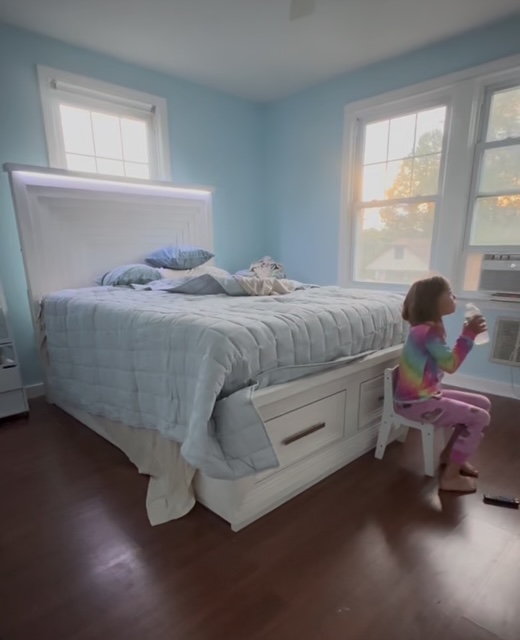
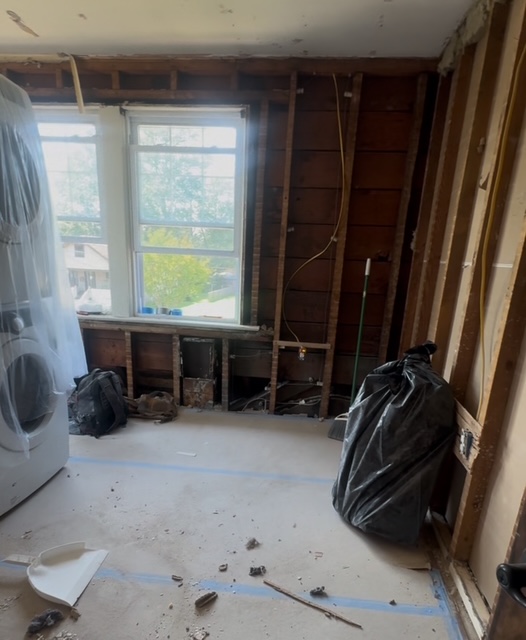
I let Adia choose any room she wanted.
We sat on Pinterest for hours picking the feeling, the vibe, the colors.
We tore the room down to the studs.
It was my old bedroom — the place where:
- my water broke
- I brought her home for the first time
- I held her, stared at her almond eyes and soft hair, and thanked God for trusting me with her
It was also the very space where our world ended for one moment changed everything. Where the decision to stay was no longer an option. Where God moved to me to know enough was enough
A lot of life — beautiful and painful — happened inside those walls.
And gutting that room felt therapeutic in a way I didn’t expect.
Watching it stripped to nothing and rebuilt overnight symbolized something I desperately needed:
A fresh beginning that didn’t require running away.

Phase Four: Remove the Things That Pull You Backwards
This part is impossible to explain unless you’ve lived it.
It’s how a lamp can make you uneasy without knowing why.
The crystal glasses from your wedding registry.
The plate you served dinner on — the one that sat cold because he never came home.
Objects hold energy.
Some memories don’t deserve shelf space anymore.
For a while, I kept things thinking that holding onto them somehow meant something could change.
But an object is an object.
And healing requires letting go of the things that keep you replaying painful moments.
You won’t forget.
You’re not going back.
You don’t need to live surrounded by reminders of the hurt.
Letting them go wasn’t pretending my life was different — it was refusing to stay anchored to a version of myself I no longer am.
Phase Five: Release What No Longer Belongs in Your Future
This includes the things no one ever talks about:
- The blankets you once shared
- The clothes tied to a life that ended
- The wedding dress
Donate it. Toss it. Shred it if you need to.
Just let it go.
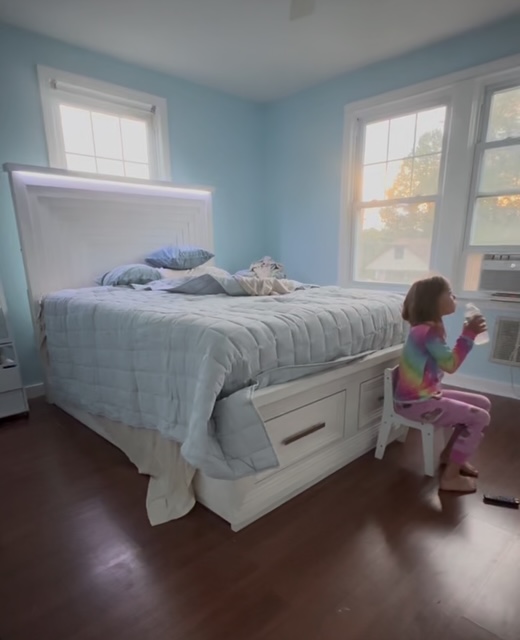
Your bedroom is sacred now — your first place of healing each morning and your last place of rest each night.
New sheets.
New paint.
New scent.
A picture above the bed that makes you think:
“Damn, I’m blessed. I’m moving forward.”
You’re not erasing your story.
You’re refusing to sleep beside the pain.

Phase Six: Shift the Space to Shift Your Energy
If you keep your couch or table, that’s okay — not everything needs to go.
But everything can be moved.
Sometimes healing looks like a couch facing a new direction or a table being touched by sunlight for the first time.
Feng shui is real — and energy matters.
A new flow creates a new feeling.
Phase Seven: Decorate for You — Not Who You Used to Be
This is where you reclaim your space with intention.
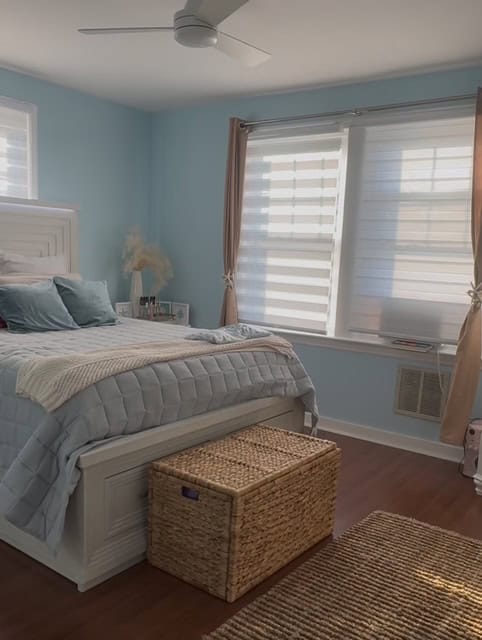
For me, it meant accent walls — bold, charming, full of personality.
Walls that make a statement without overpowering the room.
This wasn’t about making my house look nice for someone else.
It was about finally making it feel like home for us.
Phase Eight: Create Areas of Enjoyment
Healing isn’t only about removing things.
It’s also about intentionally building moments of joy into the space you live in.
Maybe it’s:
- a corner chair where you read together
- a tiny backyard spot where you drink coffee
- a game area
- a cozy couch space for movie nights
- a small nook where you journal
- a pool someday — or maybe just a kiddie pool for now
It doesn’t have to be extravagant.
It doesn’t have to cost money.
It just needs intention.
It’s a promise you make to yourself:
We will laugh here.
We will play here.
We will create memories here.
We will look forward — not backward.
And if you give that space five minutes a day, it will slowly become your new normal.
Phase Nine: Letting Go Happens in Layers — Not All at Once
As you move through these phases, you’ll realize something powerful:
Healing doesn’t happen in one moment.
Letting go doesn’t happen in one decision.
It happens in layers — over time.
For me, it took almost a year.
A year after the original cleanout, I walked back into the shed — the place holding all the boxes I wasn’t ready to face the first time — and something had shifted.
What once felt impossible suddenly felt… easy.
I threw away box after box after box.
Things I thought I needed.
Things I believed I would someday want.
Things I held because letting go felt too painful before.
But now?
It felt like release.
Like freedom.
Like truth.
There were still tears — but they were different.
They weren’t grief anymore.
They were relief.
One day, you will wake up in the same place where everything once broke — and realize the breaking didn’t define you.
The healing did.